
Caregiver Tips
Practical ideas for everyday moments.
Feeding
✳︎
Sleep
✳︎
Development
✳︎
Big Feelings
✳︎
Play
✳︎
Transitions
✳︎
Routines
✳︎
connection
✳︎
Feeding ✳︎ Sleep ✳︎ Development ✳︎ Big Feelings ✳︎ Play ✳︎ Transitions ✳︎ Routines ✳︎ connection ✳︎
Baby-Led Weaning
Myth vs. Fact
MYTH vs. FACT
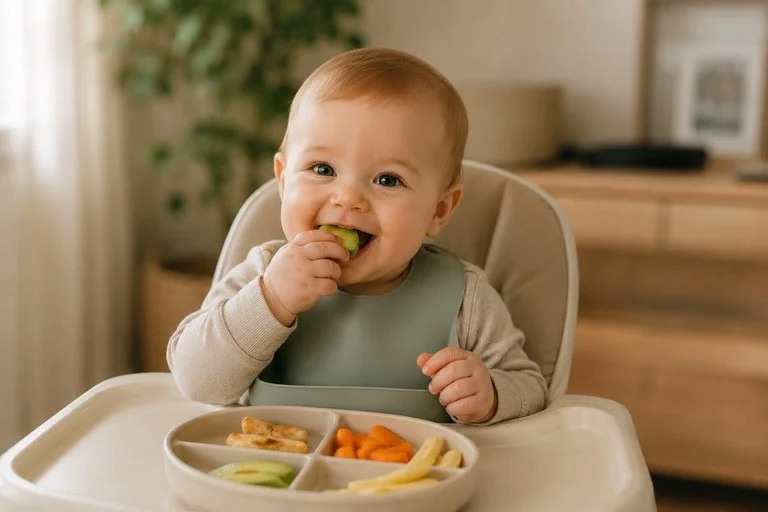
One of the biggest misconceptions I hear is that babies need teeth before they can start eating solid foods. The truth? Teeth aren't the milestone... readiness is.
Babies are able to mash appropriately prepared foods with their gums. There is bone underneath those gums and baby teeth are already beginning to develop. Their jaw provides a firm surface for them to bite and mash food.
Instead of waiting for that first tooth, watch for signs of readiness:
• Sitting with minimal support
• Good head and neck control
• The ability to bring their hand to their mouth
• Showing and interest in what others are eating
• Baby has lost their tongue thrust reflex
Every baby will develop at their own pace but most babies are ready at about 6 months of age.
Moving with Little ones
Making Transitions Easier
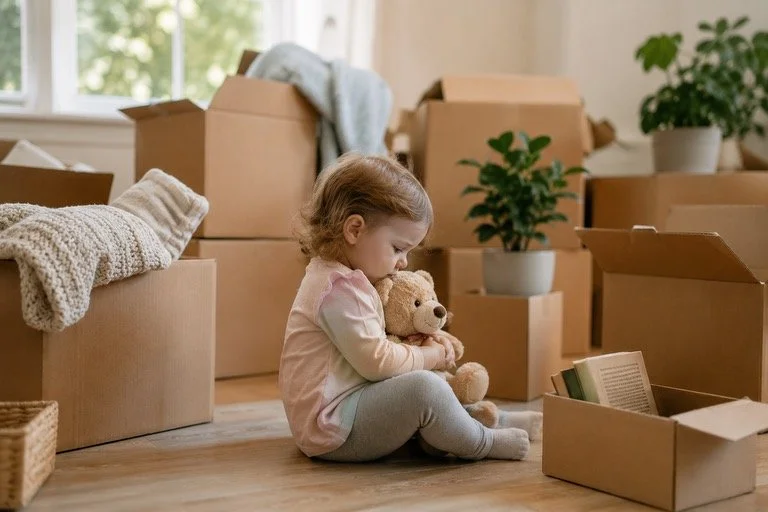
Moving is a big transition, especially for little ones who may not fully understand what’s happening. A little predictability and familiarity can help this massive change feel safer and little less overwhelming.
Visit the new space ahead of time.
If possible, take them to the new home a few times before moving day. Let them explore, play, and spend some relaxed time there so that when moving day arrives, the space isn’t completely unfamiliar.
-
Keep routines as consistent as possible.
Meals, naps, bedtime routines, and other familiar parts of the day can provide some predictability when everything else is changing.
Don’t make everything freshly washed.
It's tempting to want to “start fresh” and make sure everything is freshly clean before taking it to your new home, but this isn’t the time to wash every, blanket, sheet, lovey, or piece of clothing before packing. Familiar smells can be comforting, so bring some of their everyday things to the new home just as they are. Focus on things they will be sleeping with like sleep sacks, their bedtime toy, and blankets/sheets.
Pack a few favorites last… and unpack them first.
Keep favorite toys, books, blankets, and comfort items with you until the last possible minute. When you arrive, bring those thins into the new space right away.
Make their space your priority.
You don’t need the whole house unpacked, but try to get their sleeping space set up early. Their crib or bed, sheets, sleep sack, sound machine, favorite books, and even the lighting they are used to can make that first sleep in a new room feel much more like bedtime as usual.
Let one person focus on the them.
If possible, divide and conquer. When you arrive at the new home, have one adult focus on the child while someone else starts unpacking. Having everyone immediately busy with boxes can add to an already unfamiliar experience.
Keep your language simple and reassuring.
Talk about what is happening in words they can understand: “Were going to our new house. Your bed and your toys are coming with us. Mom and dad are going to!” (Include and pets and siblings.)
Create a positive memory in the new space.
Do something familiar and enjoyable as a family. Read a favorite book, have a favorite snack, play with a familiar toy, or cuddle together. Help their first permanent experience in the space feel safe and connected.
Big feelings
Connection before Correction
Rachel came running up to me one day, tears streaming down her dirty little face while she rubbed her eyes and quickly turned that dirt into what looked more like mud.
“What wrong Rachel?” I asked. No answer. Just more tears.
“Do you need some love?” I prompted.
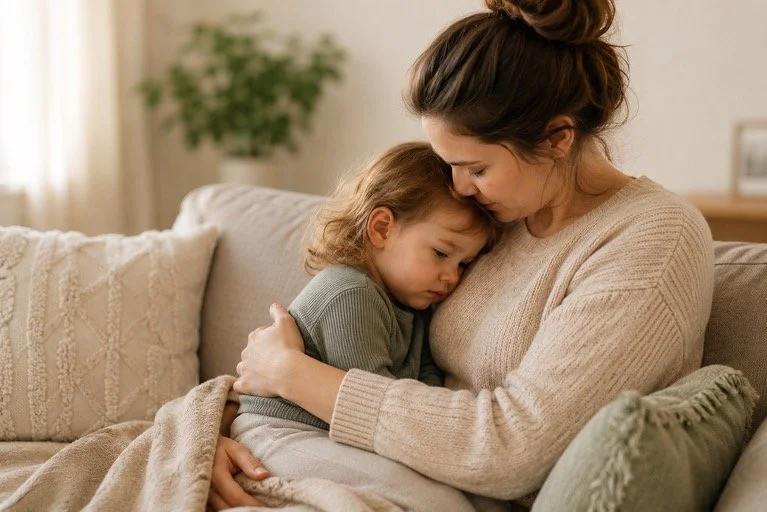
A simple nod was all the permission I needed to pick her up and hug her while she wrapped her legs around my waist. She immediately stopped crying and laid her head on my shoulder as she watched the other kids play. A couple of minutes was all it took before I could kiss her on the forehead and set her down with a smile and a whisper, “Go play with your friends”, and she was off.
-
This was the first of many times I would use the question, “Do you need some love?” Though I have since begun to teach the children that there are several ways to love, and that love is not only given in physical form, but also by being kind, giving, meeting someone’s needs etc., the kids understand this phrase. They know that they can come to me and tell me that they “need some love” and I will pick them up or let them sit with me. They have no hesitations making this request, as they already know that they are loved and will not likely be turned down.
This is the intro to day 1 of a devotional I wrote years ago when I worked in a daycare. I was thinking about it today as I was pondering how kids process their emotions and how i've heard so many adults lecture kids through the process.
Don’t get me wrong, there is a time for helping kids through the thinking part of emotions, but that time isn't EVERY time. Sometimes kids just need a moment to be in the emotion so that they have a chance to feel stand work through it themselves. That can be next to you, while you are holding them, and sometimes even in their own space. You don't have to verbalize your validation of every single emotion. Sometimes just being there really is enough.